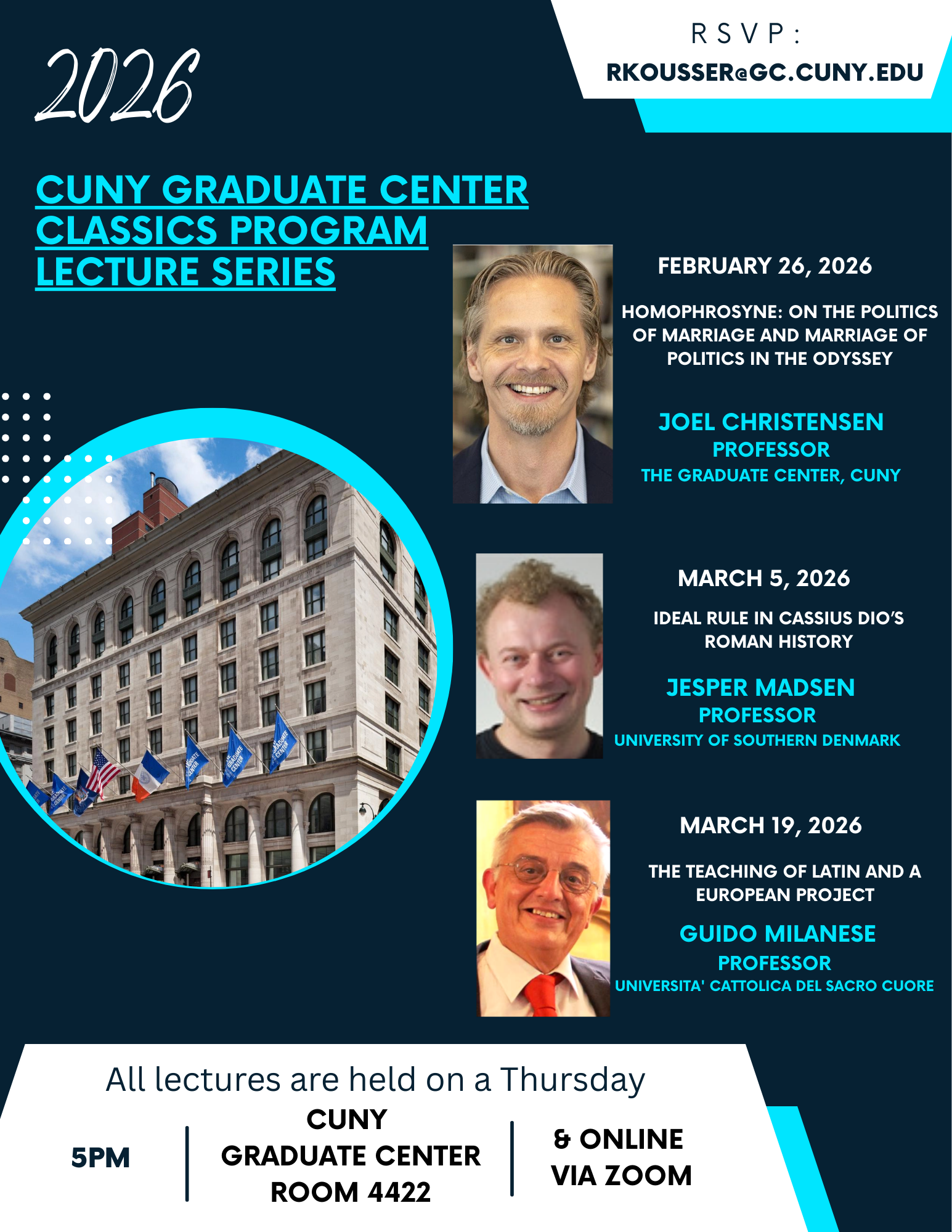
Guido Milanese
Professor of Classics
Universita' Cattolica del Sacro Cuore
Brescia-Milano IT
The teaching of Latin and a European project
What role can Latin play in general education, i.e. in teaching that is not aimed at future specialists? At a time when there is a sort of renewed interest in Latin in Europe, an educational project involving five European countries offers an interesting perspective. For a long time, Latin was assigned metalinguistic tasks (description of morphological and syntactic linguistic functions) that are now carried out through the learning of spoken foreign languages and the teaching of linguistics. Latin now has a clear historical function, enabling a direct relationship with the texts of European culture from antiquity to the dawn of Romanticism. This gives rise to a vision of Latin teaching that is not limited to antiquity, but extends to the Medieval, Renaissance and early modern worlds. In this context, learning vocabulary and consolidating core vocabulary is central, so that texts can be read directly without immediately aiming for translation but rather for comprehension of the text through the assimilation of sufficient core vocabulary. The Eulalia -- In-Eulalia project, developed over several years in Europe, aims to achieve uniformity in Latin learning levels across the continent by proposing clear levels of linguistic competence and developing teaching tools that enable an efficient approach to the study of Latin and effective educational and cultural exchange between European nations in order to recognise themselves in the common culture that unites them.
In person at the CUNY Graduate Center, Room 4422
OR
Via Zoom— email RKousser@gc.cuny.edu for the link